Sunday, June 21, 2015

Small gesture, big impact

I hope you’re doing well!  Last week, I shared the importance of surrounding yourself with great people.  You are the product of the five people you spend the most time with.  So, I have been thinking about how to be nice to people around me, and to be remembered for being good.  


Do you ever think back to a co-worker or a classmate from many years ago?  Or do they just fade into dark corners of forgotten memory?


On the Road to Work


I drive on a two lane road with a wide median to work.  This morning, I saw a man crossing the street to get to a bus stop.  He had crossed half way and stood at the median as a long row of cars kept driving.  This man stood in the middle looking both ways, apparently dazed by the passing cars.  


I stopped to let him walk the remaining half to the bus stop.  At first, he hesitated and then looked my way.  After waving a hand, he started to walk.  As he walked, he first pointed a finger at me in recognition, then gave a double thumbs up, arms raised high.
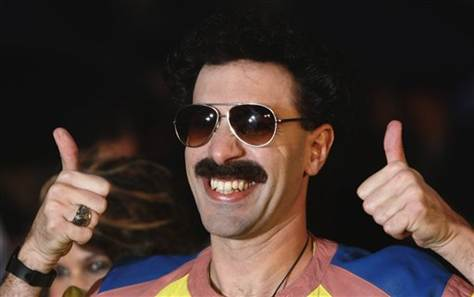


Was he really that excited and surprised that someone had stopped to let him pass?  (Apparently, people in my city don’t know the rules of right of way for pedestrians.  Sadly, South tends to be rather regressive when it comes to things like this.)


A small gesture can make someone’s day.  This gleeful pedestrian made me think about how just few, small things can make the difference between happiness and misery, whether in public or private life.  Small big things.


Be Memorable, Be Vulnerable


In my book How to be Happy: 12 Powerful Steps, I talked about a Daily Values List.  Unlike the todo list, this list does not get crossed off.  Rather, it’s an aspirational list, a list of reminders to help me be a better person.  An item on that list is “be vulnerable.”  Another item is “be better than yesterday.”


One of my goals at my new work is to be genuinely good to people around me.  Of course, I’m always courteous.  But, do I really care about people who are basically strangers outside of work?  The other day, I was talking to “V,” who is a summer intern in our marketing group.  It turns out she got married the prior weekend.  As far as I could tell, there was no group celebration about this news.  The next day, I grabbed a little card and wrote a congratulatory message and shared how glad I was that she was on the team.


Her response: Thank you SO MUCH for the card! That was amazingly sweet and I love the stationary.


What small item on your list will give you a big return?  What small gesture you make will make someone smile?  I believe in making someone else smile, you will, too.  


Much of what we think about career accomplishments tends to be focused on skills or tasks.  You often find tips about how to be more productive.  Certainly, today’s dynamic and complex economy demands high skills and productivity.  Still, beyond the techniques and processes, all work is done with and through people.


Exercise


What small action can you take today to make someone’s day?  (And in turn make yours.)

I’d love to hear about your little big thing.


Further Reading

Did you enjoy this post? I help people and businesses grow at betterandhigher.com.  Please subscribe and share!

Sunday, June 14, 2015

Five People You Meet and Power of Context

I hope you’re doing well!  Last week, I shared the importance of assuming the right attitude and thinking about the type of story you want to live out in your new role.  During this past week, I thought about the people I joined in doing the work.


Five People


In The Five People You Meet in Heaven, the author Mitch Albom imagines that heaven consists of the five people who most influenced you on this earth.


A brief Wikipedia synopsis: “Eddie is killed and sent to heaven, where he encounters five people who significantly impacted him while he was alive.”


I find this to be an interesting metaphor for life.  The world you create in life is the world you’ll know in afterlife.  If we choose to be happy and surround ourselves with happy people, we will find that happiness beyond today.  It’s been a few months since I released How to be Happy: 12 Powerful Steps.  Yet, the daily practice goes on.  Who we choose to be around has a profound impact on our own happiness.


And it’s not just happiness.  I’ve once heard that we become the five people you spend the most time with (choose your friends wisely)!  Spend all your waking hours around drinkers, and you’ll find yourself drinking more.  If all your friends become vegetarians, you’ll find yourself eating less meat.  (You know this to be true.  When you join a company where everyone works late, you find it hard to go home on your own.  Choose your careers wisely!)


This is profound.


As much as you like to think you control your habits, you’re at the mercy of the environment you live in.  And that environment has a surprisingly narrow definition: the five people you spend most time with.


This is also empowering.  Your own habits and attitudes will influence those around you.


The Old and the New


As I mentioned in previous post, I recently started a new job.  With that, I have the pleasant opportunity to connect with new kinds of people and to make new friends.  


The old me thought about how I could get ahead.  The new me wonders what I can do to help others get ahead.  The old me thought about how much money I could make in such and such a role.  The new me wants to be content with work as its own reward.  The old me focused on me.  The new me catches myself doing that, and remembers to look around.  The old me worked hard to give all the answers, pleased to think of my own brilliance.  The new me seeks to ask questions so I can learn.


The old me was young and immature, but had no idea about how immature I was.  The new me at least recognizes I’m immature and knows nothing.


The Choice and Power Are Yours


One of the new people I recently met at work is a young fellow named Phil.  He sits by himself quietly for the most part.  He sits little bit apart from the team in a corner, and I thought he was one of the analysts who’d been with the company for a while.  I started talking to him and learned that he’s an intern.  That explained why he sat quietly by himself and no one seemed to talk to him regularly.


I’m pretty sure the old me would have thought to myself: interns … what do they know?  Turns out, Phil knows quite a bit!  He apparently runs a laundry concierge service at his college, and the business rakes in six figures net income!  He’s exactly the kind of entrepreneurial and energetic people I wanted to surround myself with.  Yet, I’m curious how many other people know this about Phil.

You have the power to surround yourself with good people, happy people, fun people.  You also have the power to be good, be happy, and have fun with your life.  And the process of choosing is a daily practice.  Choose wisely each day.


Further Reading

Did you enjoy this post? I help people and businesses grow at betterandhigher.com.  Please subscribe and share!
Sunday, June 7, 2015

What is your favorite story of a new beginning?

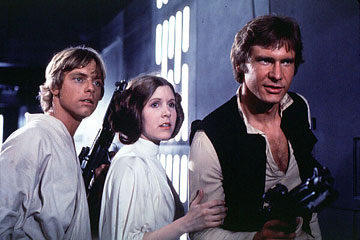
A New Hope

Recently, I started a new job.  I’ve done this many times in the last few years.  Maybe too much.  Along with the usual experiences of a new start - excitement, curiosity, even fatigue - I thought about how I might make this particular beginning memorable and meaningful.  

(I experienced many new starts.  As a young college graduate in a post-dotcom bubble economy, I had a job offer rescinded.  It was my first taste of how callous and impersonal the business world can be underneath the smiles.  As a young auditor at a Big Four accountancy, I felt I found a good job, but not one I found interesting.  And when I found something that was fun and interesting, I struggled to balance it with financial payoff.  All this to say that I’ve experienced many ups and downs, and I’m still here!)


In this new start, I got to thinking about what kind of story I want to tell of this period in my life when I look back.  For me, the story as told in the movie starring Robert Redford, The Natural, comes to mind.  In that movie, Roy Hobbs is a baseball phenom with a complicated history.  His talents as a young baseball player lead to hubris.  That prides leads to a fatal mistake that derails his career before it starts.  Years later, many years after the world has forgotten him, Roy returns to the baseball he loves and starts over.  He is an old, 30-something rookie.  He swallows his pride and others’ skepticism and shows up for practice every day.  He works hard to prove himself.  He is human.  He stumbles with the new-found fame, but remembers his old self and gets back on track.  Rather than taking a bribe to throw the pennant game for big payoff, he stays true to himself and does his best with what he has.  

Roy’s story resonates with me.  Rather than dwelling on the past, the right attitude is to assume humility, and be curious like a newcomer should be.  A new player should be deferential to the team, and work hard to prove himself.  Certainly, some work will be menial, but I can use all things as an opportunity to learn.  I hope that I can look back years from now and be proud of how I worked hard regardless of my age.  I hope that I can take pride in serving my team and my customers faithfully, and growing as a leader.

Narrative Arc: What’s your story?

Which makes me curious.  What kind of narrative are you writing with your life or with your career?  If you started something new recently (a new job or new family or new location), then what kind of story would you like to be able to tell about it when you look back?  Were you beaten down, but picked yourself back up and persevered?  Were you faced with evil (or difficult) forces, but kept your integrity and won with patience and love?

This isn’t about legacy.  It is about how you make sense of your world.  What kind of experience do you want to have in your life?  Thinking about the right narrative arc can help.  In his book The Seven Basic Plots, the author Christopher Booker outlines seven narrative archetypes:

  1. Overcoming the monster
  2. Rags to riches
  3. The quest
  4. Voyage and return
  5. Comedy
  6. Tragedy
  7. Rebirth

I think my story will be a mix of these.  What I do know is that I want to be more mindful about writing a plot and working hard to follow the plot this time around.  I wonder what kind of story you’re excited about living out.

Exercise

Think about the narrative arc you would like to live out.  How would you work to build that story into an aspect of your life today?

You may want to check out the book The Seven Basic Plots by Christopher Booker.

Sunday, August 4, 2013

Don't step back, step forward - why pain is good

First posted on Medium under similar title: don't step back, step forward.

When you come to a fork in the road, take it. - Yogi Berra

Our fears and our views

I love running hilly courses. I find it odd that even those who run regularly often express fear of running uphill. And those who don’t run assume that I prefer to run flat surfaces: “Oh, so many hills in that neighborhood! Where do you run?”

Why is that?

It is as if people retain the memory of the pain. The pain of huffing and puffing up a hill, the muscle in the legs tingling with unpleasant soreness as the lactic acid builds up. The burn in the leg. The burn in the lungs. Pain leaves an impression. It is nature’s signaling mechanism, a coping mechanism intended to preserve us from future harm. And we project this memory of pain. “You are running up the hill?” Implication of thought: ‘ouch, that sounds painful.’
“Your new idea is failing?” … ‘ouch, that sounds painful.’
Why do I like running hills? It is because of the perspective: literally and figuratively. As you rise up the hill, you can see more. There is a vista of the city or the valley below. And as you inch toward the pinnacle, there is an inner transformation that hints at other things in life like accomplishment, possibilities, pinnacles. (I suspect that such feelings echo what mountaineers feel, when they undertake to bag an untamed peak.)

View atop Pyramid Peak. Lake Tahoe to left.


On perspectives

In business school, we adopted certain common phrases that spoke to a position befitting a leader. Chief among these:
Let’s take a step back.
I am often heard giving advice to people: “take a step back” or “let’s look at the big picture” or “take a 50,000 feet view from the top.” Or some such platitude. Why? Because you feel that is what you need when you feel bogged down in the mud of conflicting stakeholders, or lost in the darkness of uncertainty. How often had I really given thought to what I was saying from the perspective of the person receiving that comment from me?

Then, recently, I had the experience of hearing it as an advice offered to me. I have many different thoughts in my head and trying numerous projects. I should perhaps step back and gain perspective on what I really want.

It stopped me. It really made me think. Is that true? What is my next step? What does it actually mean for me? Step back to what? Does it mean putting my different efforts on hold so that I can focus? But, that’s more like stepping forward, rather than backward. Is it to spend a few days not thinking about the current problems to let the mind tie the pieces together?

In his book Where Good Ideas Come From: The Natural History of Innovation, Steve Johnson suggests a technique for stepping back by recalling Poincare’s description of a “eureka” moment.
I felt them collide until pairs interlocked, so to speak … by the next morning I had established the existence of a class of Fuchsian functions …
Henri Poincare had been stuck on a problem. According to Johnson, one evening Poincare took a break from the routine to go for a walk. It had apparently loosened the ideas that existed in Poincare’s head, literally let them shake in the head and bump into each other. That’s the process of serendipity.

Step Forward, not Backward

But both my reflection on words from a friend, and reading of Johnson’s book reminds me that there is actually no stepping back. Just as you go for a walk to let ideas progress, so you don’t step back. Instead, you step forward. For entrepreneurs, that might mean more focus, more persistence; not relenting to take in a bigger picture, but rather to dive deeper in search of new truths. It sounds painful.

When you are at a wall, and banging your head, it is painful. We are conditioned to avoid pain. Step back. Look where the fires are with a bird’s eye view. Maybe you should avoid it. Or maybe you should walk through the fire and see what’s on the other side. If only you’ll walk forward.

I have the experience of giving up on something. There was a mobile application I built with a friend called Voicegram. It was sort of a non-starter idea, and neither of us were mature or experienced to know it. Now we know. But, I remember saying of that particular project:
“Never give in, never!”

… citing Winston Churchill’s exhortation to the Britons under existential German attack. Never give in. But I did. We did. We gave up. And yet I never did. I am still learning and growing. And that pain of failing, of letting go of an idea and learning… of climbing a hill, feeling the burn … that pain is useful and vital for progress. It is the only way out of mud and out of darkness.

I love running hills. Maybe I’m dumb. But I love the perspective.

Chasing sunset

Of faith

Many things in life, as in entrepreneurship take faith. To trust that there is a better future, to have faith that our efforts will bear fruit. We fear pain and failure, but faith would tell us to be resourceful and look beyond the pain. Anything is possible, even for an MBA to break into tech as a programmer.

Important thing is to keep doing, to keep an open mind and not label and dismiss others, but to always learn and grow.  And that growth is not always linear. Just like life, one takes interesting turns and forks in the road.  I never thought I'd publish a book on Happiness, but I did.

Don't lose faith.  Step forward.

Further Reading

Did you enjoy this post? I write about personal and business growth at http://www.betterandhigher.com/.  Please check it out and subscribe!

Saturday, July 20, 2013

How does a MBA break into high tech? My story

I quit a nice corporate job, and moved to San Francisco, I started more or less from scratch,  No one cared about my MBA degree.  

So Many Resources, If Only You Look

I wanted to break into the San Francisco Tech community, and quickly learned that programming skills were valued above all; and MBA degree per se had limited appeal. There was no way to learn to program quickly, but that did not stop me from building a network.  Specifically, I began appearing at local evening meetups through groups like SFRuby, and in the course of a few weeks, begin to see the same faces and make friends with developers. Soon, I learned that there is a thriving community of people helping people learn, through workshops such as Railsbridge.org - workshops for women and their friends. It did not take much more than some courage and willingness to learn to become a volunteer and gain visibility.  (Hackathons are another great place to see/meet tech-minded people: why you should go to a hackathon today.)

How Rookies Got Started

I was hooked. Tech was not as scary as I had imagined. All it took was willingness to learn, to pitch in what I could, and not be ashamed of being a rookie who may not have all the answers (unlike an MBA who would be expected to have ALL the answers). These experiences helped me become more aware about the importance of learning in my own life; I persisted in coding.  I soon met others in my position - those new to city or new to programming. Then, it occurred to me that I could help in a new way: why not form a small group and create a co-learning experience, and give each other support? Thus was born RubyRookies. I had done some volunteering in politics before: canvasing, voter registration, etc. But, this was my real first experience in building a grassroots effort. I made many new friends through these gatherings. One of my big fears as a newbie in town was where I might find a community to plug into. It turns out, I was lucky enough to be fitting into my very own! We had a lot of fun - including hosting some panel events and lots of fun programming meetups:

Lot of fun coding away at night
Long story short, there are plenty of ways to build a network like the one you might find in a MBA Program. What I would recommend is that you keep these basic human principles in mind:
  • Ask what you can contribute - You have some skill here and now, even if it's not the one you want, that will allow you to add value. I can recommend a really good book on this topic for people of all stripes - a classic by Peter Drucker, called The Effective Executive.
  • Focus on and measure outcome - If your contribution is not valued, it is a signal to you to re-articulate or to re-frame ... until you begin producing outcome. It's not an easy process. You just have to chip away at it.
  • It's about them, not you - If you take the self-centered approach, I think you might find your world to be a very small one indeed. Look around you, there is so much need and so much opportunity! Network starts there.
  • Learn, learn, learn - That's my mantra, anyway. If I am not learning, I am dying. I am not sticking around a place where I am stagnating. Only by learning can one grow, and only by growing, can one branch out and help others.
  • Do what you love - I wasn't getting paid to organize events or create venues, nor was I charging to hear people out or give them coaching. It was just what I enjoyed doing. The gratification I received from those who attended my gathering thank me was enormous. And that joy spilled over into introductions and to positive brand. It helped me in so many ways in the local community.
  • Have faith. Have courage - Whether you are an MBA or not, you really have to get comfortable being uncomfortable. Step out of the comfort zone until it feels natural. Sometimes it's painful. But, that's okay - step forward. You can do it!
  • Persist - Similar to last point, but don't give up. Never give up (even though you may pivot).  The luck favors the prepared. It also favors the one that's around ... and if you gave up, well, you're not around anymore.
  • Be human - At the end of the day, you learn that life is joyful; life is short. Don't use people. Instead help people and be who you are. Be genuine and just enjoy the process of connecting with new minds and new skills. Do it because it's fun, not to fatten your rolodex. People are human beings, not stream of revenues.
  • Sell - As IBM's Tom Watson said, "nothing happens until you make a sale." Learn to sell yourself, learn to sell for someone. Sales is truly valuable to anyone. You do that, and people will listen to you. I share my experience of starting with small in How I sold my first lemonade.

Other Thoughts

I will add that another way to build a network is to attend an intense, brief learning community, like a Programming Course. 


For those set on attending MBA, consider the ROI relative to alternatives. Now, learn to code - it is a truly useful skill to learn for our age. See the entry: soon your taxi driver may know more Ruby than you do. Finally, yes, it is scary, and you may fail, and failure can be painful. But, sometimes, pain can be good - instead of stepping back, consider stepping forward.

Help others and they help you


Further Reading

Did you enjoy this post? I write about personal and business growth at http://www.betterandhigher.com/.  Please check it out and subscribe!