Showing posts with label Small. Show all posts

Sunday, July 12, 2015

Be the Best You Can Be - However Small

I previously reflected on the story of the tortoise and hare, and how incremental progress can accomplish big goals.  Just as with the post about small gestures with big impact, I want to be better about making small changes to be more effective and happy.


“Go to work every day and make getting better your North Star. Aim at that every day,” - Jim Collins


Reality vs. Fantasy


It’s fun to look for small things in my life to improve.  Why?  


Because, in the past, I often thought about big dreams, but realized looking back, I accomplished very little of those dreams.  When I was younger, I had no context to evaluate the link between planning and outcomes.  Now, looking back over the years, I can see the impact not only in my own life, but in the life of those I know.


More to point, I’d like to harness the power of building on success to continue to grow and develop.


(Fantasy v Reality - These used to popular on Facebook last year)


Two Bios - Bezos and LBJ


There are two stories that come to mind about this.  One is of Jeff Bezos, founder of Amazon.com.  The other is of Lyndon B. Johnson (LBJ).


There is a famous story of an early Amazon days.  The young and inexperienced CEO Jeff Bezos asked the famous business author Jim Collins for advice.  Bezos admitted in front of his team that he felt was was something “less than a Level 5 Leader.”


(“Level 5 leader” is a leader who has mastered and combined personal humility and will to being a great leader.  Jim Collins wrote many business classics like Good to Great and Built to Last.)


Collins advised Bezos:  “Go to work everyday and make getting better your North Star: Aim at that every day.”


One can argue, Bezos took the advice to heart, and has been doing better everyday for a long time now.


LBJ


I came across another interesting example of taking small tasks seriously by another famous figure: LBJ.


While a young man in college, LBJ took a temporary teaching job in Cotulla, Texas to earn money to pay for his tuition at San Marcos.  The school was for Mexican students whose parents were mostly workers for the white business owners in that southern corner of Texas.  Other teachers took the job with disdain, and treated Mexican children like something less than people who needed education.


Not so Lyndon Johnson.  He put his heart and soul into the school, getting to work before anyone and leaving after everyone left.  Where the school had no extracurricular activities, he devised new ones and connected with nearby schools to give the kids something to do.  Where the children had no transportation to get to events, he’d call on parents with cars (only few had cars) to get the kids to places.


What struck me was that he did all of this not only because he cared about the job and the kids (he did), but because he understood getting a stellar recommendation from this small gig would help him land other positions thereafter.


What You Can Do


You might be working on a boring task right now in a job that feels static.  Just as LBJ did, understand that how you approach a small task will define the opportunities you are given later.  (In the Bible, there’s a story in the book of Matthew about servants to whom talents are given to invest and grow.  In this story, Jesus rebukes the lazy servant who hid the one talent and did nothing with that talent.)


Or, you might be excited about the challenging task you have.  But, you’re stressed because the goal seems insurmountable.  You understand that this big challenge is like finishing a marathon.  You will complete the 26.2 mile-long race one step at a time.  One step.


Focus on getting better everyday.


Further Reading


Did you enjoy this post? I help people and businesses grow at betterandhigher.com.  Please subscribe and share!

Sunday, June 28, 2015

The tortoise and the hare, or how to save 2 million bucks

I hope you’re doing well!  Last week, I shared how small things can mean a lot in personal relationships.  This is just as true in a professional context.  The key is to move forward little by little.  Rick, a personal role model, who often talks about the power of incrementalism.  Small steps can be powerful.


Let me share a story, then suggest concrete steps you can take to achieve seemingly impossible goals.  (And a story of small, big investing.)


The Fable of the Tortoise and the Hare


Consider Aesop’s story of the tortoise and the hare.  In the Wikipedia synopsis:


“Tired of the Hare’s boastful behaviour, the Tortoise challenges him to a race.  The hare soon leaves the tortoise behind and, confident of winning, takes a nap midway through the race. When the Hare awakes however, he finds that his competitor, crawling slowly but steadily, has arrived before him.”


What lessons can you draw from this story?


If you’re the rabbit,
  • Don’t be an ass (or hare)
  • Don’t slack off
  • Pride can lead to self-destructive behavior


If you’re the turtle (or more generally in life):
  • Be relentless in pursuit of your goal
  • Show up consistently, every day
  • Small steps applied consistently can lead to big outcomes
  • Don’t be afraid of tackling big challenges, even if you don’t have a natural talent for it (whatever you assume that to be)


Life Application


I can share a telling example of how this story plays out in life.


In 2007, I started reading a blog by an anonymous IT engineer at IBM who wrote about his goal of saving $2 million for retirement.  His blog is called 2MillionBlog.


The engineer had only a modest income, earning around $50,000 working full-time for a big company (decent salary in 2007).  At the time, he had saved over $350,000, so I imagined he had been saving for a while.  Gains in stock market and his employer stock options helped him get to that point.


I then stopped following his net wealth updates as I went back to school, and then had a career roller coaster for several years.  Basically, I had better things to do.


Fast forward to 2015, and I check in on this personal finance blog.  As of May 2015, this engineer now has a networth of around $1.3 Million, including equity built up on 4 houses!  


His salary had not changed much, and he did not have a side income to supplement his paycheck.  Plus, he had gotten married and had a child, and his wife does not work (she had worked for a while as a pre-K teacher, earning a modest salary).


So, how did he do this?  I gathered these key points:
  • First, he had a goal; he wanted $2 million.  “If you don’t know where you are going, any road’ll take lead there.” (Lewis Carroll)
  • Next, he measured.  Unlike the tortoise, navigating most modern endeavors is more complex than walking.  Measuring the right things is a prerequisite to the behaviors that will help you achieve your goals.
  • Third, he learned.  This engineer didn’t start with a master plan.  Hell, he probably didn’t even know about investing basics when he started with his desire to save up for retirement.  But, he learned well, and applied the lessons.  He learned to buy and manage multiple properties.  He learned about retirement savings.  He took advantage of credit card promotions, traveled cheap on reward points, and a host of other techniques.  “Plans are useless, but planning is indispensable.”  (Dwight Eisenhower)
  • Finally, be the tortoise.  Don’t snooze.  I acted like the hare.  In the intervening years, I lived like how most Americans live.  Working, saving a little, spending more.  While the IT engineer tortoise inched along, I took this detour and that detour, and took long naps.


Behind the simple story, you can see many texts between the lines.  The first three steps don’t lead to big outcomes on their own, but the fourth (be the tortoise) is like the magic recipe.  By sticking to the daily behavior toward the goal, this IT engineer let powerful forces of compounding do the heavy lifting.  


At first, he despaired that he may never get to $2 million.  But, after a while, the monthly gains from dividends and rising asset prices helped him add to his wealth far beyond his monthly income.


(By the way, there’s a great book about this kind of small things leading to big savings in a book called The Millionaire Next Door, by Thomas Stanley.)


Counterpoint


Of course, there’s no sure thing.  The markets could come tumbling down.  This post isn’t a howto on getting wealthy.  Rather, I wanted a reminder of the power of consistent and properly directed small effort.


How can I work so that I am a little better than I was yesterday?  And how can I let that build on itself?


And all of this should be done with a degree of humility about the bigger forces (beware of hubris).  I found this captured in ancient wisdom from Ecclesiastes 9:11 (King James translation):


I returned, and saw under the sun,
that the race is not to the swift,
nor the battle to the strong,
neither yet bread to the wise,
nor yet riches to men of understanding,
nor yet favour to men of skill;
but time and chance happeneth to them all.


Exercise


Think of a big goal you had struggled to achieve in the past.  Break it down:
  • Write down the goal
  • Take a stab at what you want to measure to ensure you’re moving toward the goal
  • Resolve to learn from the journey so you can be better than you were yesterday
  • Stick with it; don’t give up!
  • Perhaps you’ll want to pick up this FREE Kindle copy of Aesop’s Fables.

Further Reading

Did you enjoy this post? I help people and businesses grow at betterandhigher.com.  Please subscribe and share!

Sunday, June 21, 2015

Small gesture, big impact

I hope you’re doing well!  Last week, I shared the importance of surrounding yourself with great people.  You are the product of the five people you spend the most time with.  So, I have been thinking about how to be nice to people around me, and to be remembered for being good.  


Do you ever think back to a co-worker or a classmate from many years ago?  Or do they just fade into dark corners of forgotten memory?


On the Road to Work


I drive on a two lane road with a wide median to work.  This morning, I saw a man crossing the street to get to a bus stop.  He had crossed half way and stood at the median as a long row of cars kept driving.  This man stood in the middle looking both ways, apparently dazed by the passing cars.  


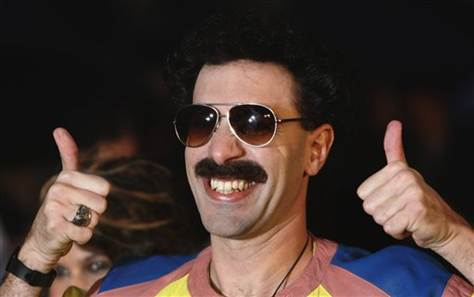
I stopped to let him walk the remaining half to the bus stop.  At first, he hesitated and then looked my way.  After waving a hand, he started to walk.  As he walked, he first pointed a finger at me in recognition, then gave a double thumbs up, arms raised high.


Was he really that excited and surprised that someone had stopped to let him pass?  (Apparently, people in my city don’t know the rules of right of way for pedestrians.  Sadly, South tends to be rather regressive when it comes to things like this.)


A small gesture can make someone’s day.  This gleeful pedestrian made me think about how just few, small things can make the difference between happiness and misery, whether in public or private life.  Small big things.


Be Memorable, Be Vulnerable


In my book How to be Happy: 12 Powerful Steps, I talked about a Daily Values List.  Unlike the todo list, this list does not get crossed off.  Rather, it’s an aspirational list, a list of reminders to help me be a better person.  An item on that list is “be vulnerable.”  Another item is “be better than yesterday.”


One of my goals at my new work is to be genuinely good to people around me.  Of course, I’m always courteous.  But, do I really care about people who are basically strangers outside of work?  The other day, I was talking to “V,” who is a summer intern in our marketing group.  It turns out she got married the prior weekend.  As far as I could tell, there was no group celebration about this news.  The next day, I grabbed a little card and wrote a congratulatory message and shared how glad I was that she was on the team.


Her response: Thank you SO MUCH for the card! That was amazingly sweet and I love the stationary.


What small item on your list will give you a big return?  What small gesture you make will make someone smile?  I believe in making someone else smile, you will, too.  


Much of what we think about career accomplishments tends to be focused on skills or tasks.  You often find tips about how to be more productive.  Certainly, today’s dynamic and complex economy demands high skills and productivity.  Still, beyond the techniques and processes, all work is done with and through people.


Exercise


What small action can you take today to make someone’s day?  (And in turn make yours.)

I’d love to hear about your little big thing.


Further Reading

Did you enjoy this post? I help people and businesses grow at betterandhigher.com.  Please subscribe and share!

Sunday, August 4, 2013

Don't step back, step forward - why pain is good

First posted on Medium under similar title: don't step back, step forward.

When you come to a fork in the road, take it. - Yogi Berra

Our fears and our views

I love running hilly courses. I find it odd that even those who run regularly often express fear of running uphill. And those who don’t run assume that I prefer to run flat surfaces: “Oh, so many hills in that neighborhood! Where do you run?”

Why is that?

It is as if people retain the memory of the pain. The pain of huffing and puffing up a hill, the muscle in the legs tingling with unpleasant soreness as the lactic acid builds up. The burn in the leg. The burn in the lungs. Pain leaves an impression. It is nature’s signaling mechanism, a coping mechanism intended to preserve us from future harm. And we project this memory of pain. “You are running up the hill?” Implication of thought: ‘ouch, that sounds painful.’
“Your new idea is failing?” … ‘ouch, that sounds painful.’
Why do I like running hills? It is because of the perspective: literally and figuratively. As you rise up the hill, you can see more. There is a vista of the city or the valley below. And as you inch toward the pinnacle, there is an inner transformation that hints at other things in life like accomplishment, possibilities, pinnacles. (I suspect that such feelings echo what mountaineers feel, when they undertake to bag an untamed peak.)

View atop Pyramid Peak. Lake Tahoe to left.


On perspectives

In business school, we adopted certain common phrases that spoke to a position befitting a leader. Chief among these:
Let’s take a step back.
I am often heard giving advice to people: “take a step back” or “let’s look at the big picture” or “take a 50,000 feet view from the top.” Or some such platitude. Why? Because you feel that is what you need when you feel bogged down in the mud of conflicting stakeholders, or lost in the darkness of uncertainty. How often had I really given thought to what I was saying from the perspective of the person receiving that comment from me?

Then, recently, I had the experience of hearing it as an advice offered to me. I have many different thoughts in my head and trying numerous projects. I should perhaps step back and gain perspective on what I really want.

It stopped me. It really made me think. Is that true? What is my next step? What does it actually mean for me? Step back to what? Does it mean putting my different efforts on hold so that I can focus? But, that’s more like stepping forward, rather than backward. Is it to spend a few days not thinking about the current problems to let the mind tie the pieces together?

In his book Where Good Ideas Come From: The Natural History of Innovation, Steve Johnson suggests a technique for stepping back by recalling Poincare’s description of a “eureka” moment.
I felt them collide until pairs interlocked, so to speak … by the next morning I had established the existence of a class of Fuchsian functions …
Henri Poincare had been stuck on a problem. According to Johnson, one evening Poincare took a break from the routine to go for a walk. It had apparently loosened the ideas that existed in Poincare’s head, literally let them shake in the head and bump into each other. That’s the process of serendipity.

Step Forward, not Backward

But both my reflection on words from a friend, and reading of Johnson’s book reminds me that there is actually no stepping back. Just as you go for a walk to let ideas progress, so you don’t step back. Instead, you step forward. For entrepreneurs, that might mean more focus, more persistence; not relenting to take in a bigger picture, but rather to dive deeper in search of new truths. It sounds painful.

When you are at a wall, and banging your head, it is painful. We are conditioned to avoid pain. Step back. Look where the fires are with a bird’s eye view. Maybe you should avoid it. Or maybe you should walk through the fire and see what’s on the other side. If only you’ll walk forward.

I have the experience of giving up on something. There was a mobile application I built with a friend called Voicegram. It was sort of a non-starter idea, and neither of us were mature or experienced to know it. Now we know. But, I remember saying of that particular project:
“Never give in, never!”

… citing Winston Churchill’s exhortation to the Britons under existential German attack. Never give in. But I did. We did. We gave up. And yet I never did. I am still learning and growing. And that pain of failing, of letting go of an idea and learning… of climbing a hill, feeling the burn … that pain is useful and vital for progress. It is the only way out of mud and out of darkness.

I love running hills. Maybe I’m dumb. But I love the perspective.

Chasing sunset

Of faith

Many things in life, as in entrepreneurship take faith. To trust that there is a better future, to have faith that our efforts will bear fruit. We fear pain and failure, but faith would tell us to be resourceful and look beyond the pain. Anything is possible, even for an MBA to break into tech as a programmer.

Important thing is to keep doing, to keep an open mind and not label and dismiss others, but to always learn and grow.  And that growth is not always linear. Just like life, one takes interesting turns and forks in the road.  I never thought I'd publish a book on Happiness, but I did.

Don't lose faith.  Step forward.

Further Reading

Did you enjoy this post? I write about personal and business growth at http://www.betterandhigher.com/.  Please check it out and subscribe!